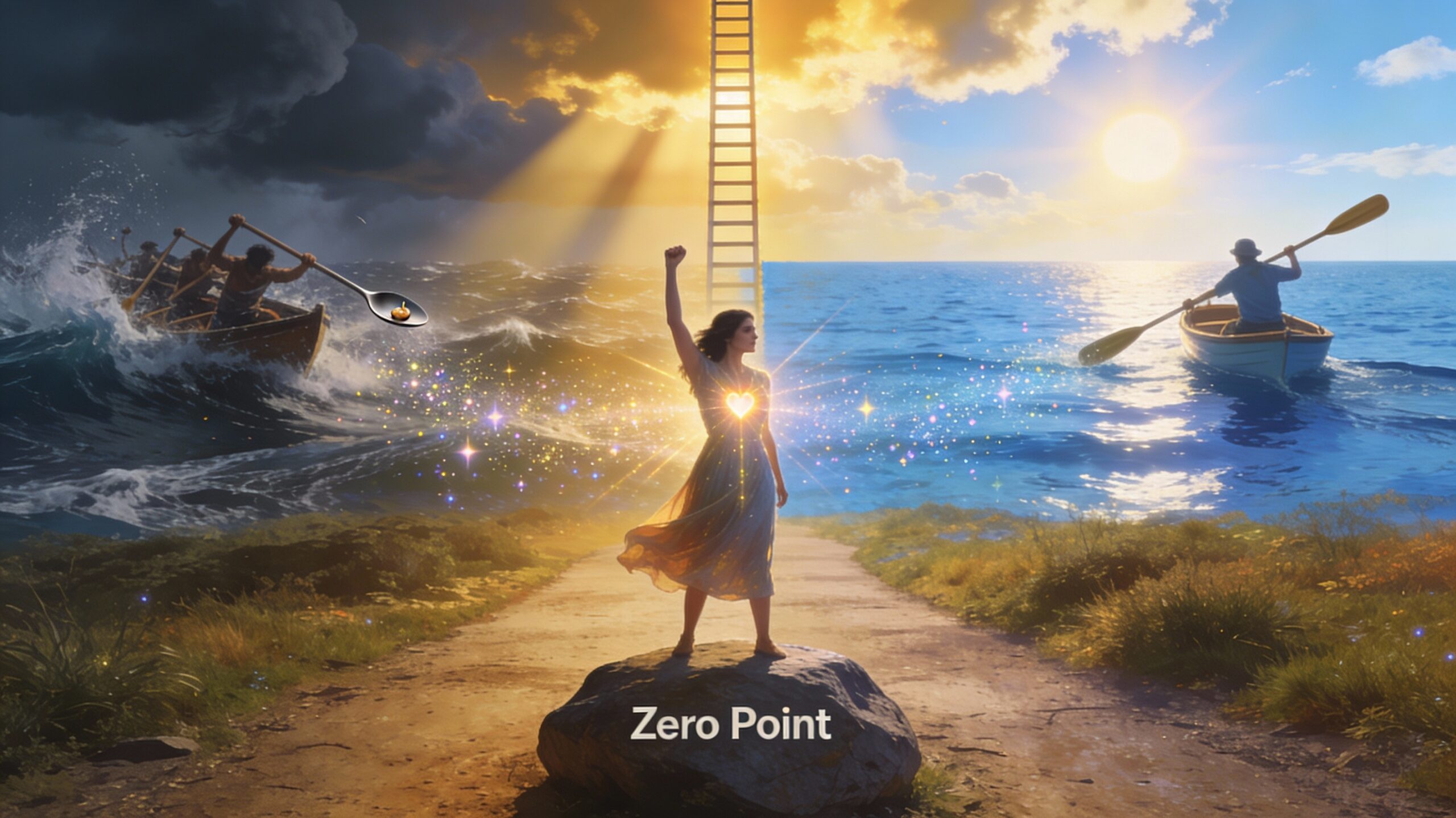
“Ohhhh, Mighty Universe. I am so grateful that you bestowed upon me this Blessing.”
BS, I say. Really, what is this trend of being “oh so grateful”. Grateful for what? But most importantly, to whom do you owe gratitude? To the universe?
Now, now, you may scold me for being so harsh, because one said being grateful for something you can do “just like that.”
Well, I asked Mighty Perplexity to provide background on “being grateful.”
Dictionary – Core Definition.
Dictionaries define “grateful” as appreciative of benefits received or actively expressing gratitude toward others. This involves recognizing value in gifts, help, or even ordinary moments — without expecting them.
Definition – Perplexity
Being grateful means feeling or showing appreciation for benefits, kindnesses, or positive aspects received in life, often expressed through thanks or acknowledgment
Definition beyond the dictionary
Gratefulness extends to a mindset that focuses on what’s good rather than what’s lacking, fostering emotional softness and connection to everyday joys like nature and relationships. It differs from mere thankfulness to a proactive choice and not just as a reaction to specific events. Practical aspects, such as practicing gratitude, involve paying attention to emotions and senses, such as delight in personal strengths or shared joys, which build resilience even in challenges. This attitude shifts perspective toward abundance and strengthens bonds.
Hence, leveraging the modern interpretation, claiming to be proactive as a new way of understanding, yet in the same breath, claims one is grateful for something or expresses gratitude toward someone.
So, let’s say we are grateful for something. Did this “something” just fall from heaven? Most probably not. But even then, we tend to think it came from God or NASA, and we are grateful to them for what they bestowed upon us. Hence, I am not a fan of the whole worshipping around ‘being grateful’.
For me, being grateful is just a saying – a saying that got hyped. A trend. Because it still puts your power outside of you: someone else – maybe God or the universe – is providing something for you. However, I see one empowering exception: When one is grateful toward oneself, e.g., a younger/former self, for their own results. Meaning, gratitude is directly linked to your own effort. Not from other people, not from the universe, not from god. Just gratitude for things the self did: overcoming hardship, persisting, and growing into who a new Self. Kind of “self-gratitude,” if I may introduce that word.
You may now ask: So, what shall we focus on instead? Based on my own experience – and I suggest you make your own to judge for yourself – I prefer satisfaction over gratitude.
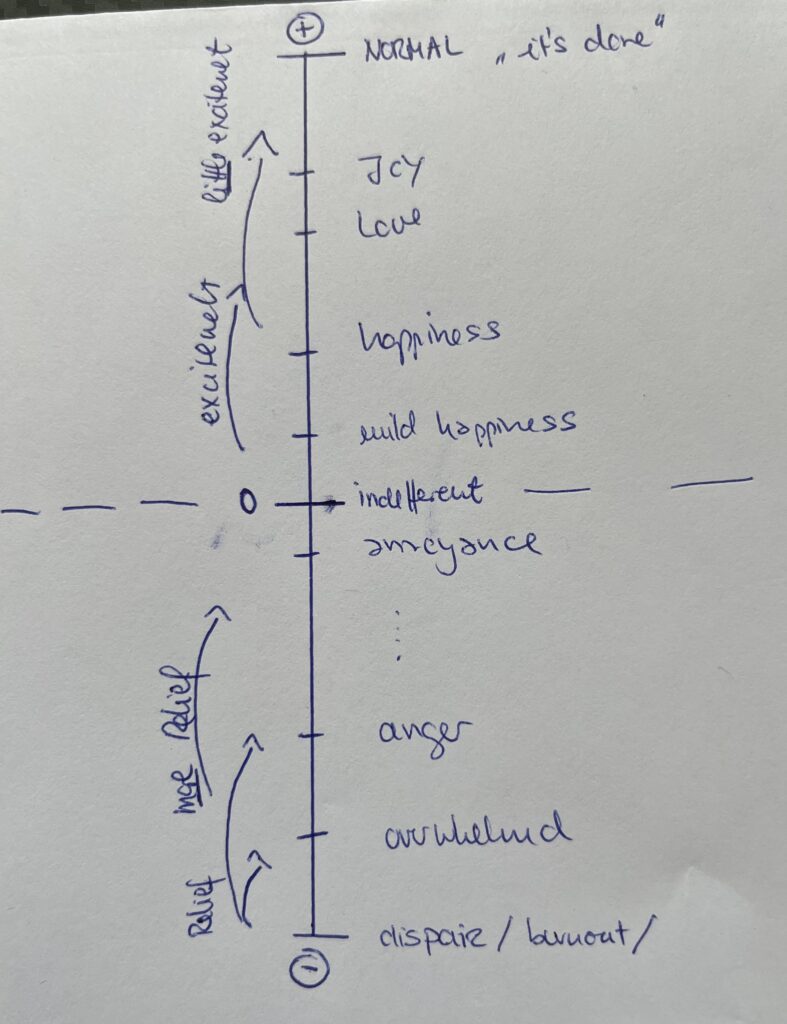
To visualize how I experience these different concepts, emotions, and feelings (which are the first reflections of states of consciousness and hence of the upcoming 3D manifestations), I created the following chart: the emotional ladder. It’s basically a raw mock-up to explain how shifting your state of consciousness feels – a continuum of change – and where gratitude comes in. Feel free to adjust it to your own needs, and maybe consult a frequency chart about emotions to understand the underlying theory.
The emotional ladder mock-up
Firstly, some definitions, as we may project different understandings into the words.
I will treat feelings and emotions as synonyms.
Relief: a shorter feeling of weight leaving one’s shoulders, created by dropping a belief, an assumption, or negative emotional ballast; once relief is fully felt, it vanishes.
Gratitude: see above — a ‘longer feeling’ of thankfulness toward a person or entity, including nature.
Excitement: a short-term feeling of a positive expected outcome or an anticipated surprise; once it’s fully felt, it vanishes.
Satisfaction / Contentment: a ‘longer feeling’ of being happy with the created outcome or achieved goal.
Normal: it just is (that’s often referred to as the “it’s done” feeling in manifestation methods).
Let’s read the chart. The continuum from bottom to top shall indicate the emotional “ladder” we climb. Usually, I use the ladder on one specific topic or person at a time. However, different topics use the same logical method (ladder) and could affect each other, but they are located on different stages/stops on the ladder. The goal is to move bottom-half topics to the upper half. Being a ”master of Self’ means most of your life sits in the upper half. As one moves topics up from the lower half, feelings are often connected to release – releasing negative emotions; whereas the upper half is more about adding to your emotional portfolio – enhancing good feelings.
Let’s get specific with a reference point: a phone call from your doctor on your vitamin levels. It should sit somewhere around 0 – meaning no bad feeling, but nothing particularly good either. If they tell you you need more vitamin D, you may dip a bit lower, e.g., into annoyance. If they tell you your values are perfect, you might move upward, e.g., into mild happiness.
Let’s look at the lower half. Relief is the core feeling indicating an upward movement. For example, when I move from feeling overwhelmed to a form of anger, I feel slight relief. Additionally, relief feels more intense when getting closer to the tipping point 0. Back to our doctor’s call example: imagine you were expecting really bad results (hence your emotion might be high anxiety), but then your doctor tells you all is within normal ranges. The felt relief would be almost overwhelming because you were catapulted to 0 from a low point.
On the other hand, the upper half feels different for me. Peace, love, happiness, joy – here stacked by their frequency – is already a pretty good feeling in itself. The movement from one good point to another (or along the entire upper ladder) feels like excitement, as the counterpart to relief. For example, I’m happy with my current car. I like it. But imagine I align with the state of having a new one — a fancy one at that. Excitement will follow and lead me from that “happy” point to an even more joyful one. I don’t think there’s a specific intensity of excitement tied to a transition. However, in my experience, the excitement decreases (yes, decreases) the closer one gets to the top of the ladder, the normal point. Excitement is a feeling of anticipation of something better but not yet being there. That is why the ‘it’s done feeling’ feels actually quite boring. However, I experience a lot of satisfaction for topics close to the top.
Coming back to gratitude. For me personally, it’s very clear that gratitude is not part of the upper half. I’m not grateful [to myself] for buying a new car. I would be thankful if someone else bought me a car, yes. But gratitude is a very particular feeling that mostly happens around the zero point and is directed at myself or the person who helped me cross it. I’m grateful for my efforts and persistence; I’m thankful for birthday wishes or a paid dinner. (I know — it seems like just semantics and definitions, but they matter. All is mental.) Hence, gratitude is generated when looking back [in time] at something negative from a new, positive standpoint. Back to our doctor example: Imagine you were working on your health for a whole year and expecting a phone call from your doctor. He tells you all is fine. You’d feel an immense wave of relief (short-term) and, in the long term, gratitude that you never gave up.
I’m always grateful that my old self endured the experience to allow me to become who I am now — that version I respect, admire, and love more because I know myself better today. Hence, gratitude often happens when crossing that 0-point. It’s like the feeling after passing through the threshold out of hell.
Of course, those are just examples (more to follow in the upcoming articles), but I’m sure you get the gist.
Overall, my goal with personal development – and hence spiritual development – is to move every aspect of life to the upper half. It’s certainly an ongoing process, but it’s the best goal in life. It keeps me sharp in my analysis of my 3D reality (aka 3D reflection), hence, in knowing my states of consciousness for each topic, person, issue, etc. It’s a gradual process at one’s own pace.